Introduction
As Ghana’s healthcare sector undergoes rapid digital transformation, the management and protection of electronic patient records have become critical concerns. The shift from paper-based medical records to digital databases has brought numerous benefits, including improved patient care, faster access to medical history, and streamlined administrative processes. However, this transition also introduces new risks, particularly concerning data security, unauthorized access, and compliance with privacy regulations.
In response to these challenges, leading healthcare institutions in Ghana should take a proactive step by implementing Role-Based Access Control (RBAC), a security model designed to restrict data access based on job responsibilities. This ensures that only authorized personnel can view, modify, or share patient records, reducing the risk of data breaches and protecting sensitive medical information.
Despite RBAC’s advantages, cybersecurity experts emphasize that technology alone is not enough. Without a Chief Information Officer (CIO) to oversee IT governance, data protection policies, and compliance frameworks, such initiatives may lack strategic direction and long-term sustainability. A CIO plays a crucial leadership role in developing cybersecurity policies, managing IT infrastructure, ensuring compliance with Ghana’s Data Protection Act, and implementing advanced security measures to fortify healthcare data against cyber threats.
As Ghana’s healthcare industry continues to embrace digital innovations, the conversation must extend beyond technical solutions like RBAC to include executive-level leadership. The appointment of CIOs in healthcare institutions will not only enhance data security but also ensure the effective governance and modernization of IT systems, ultimately leading to better healthcare delivery and stronger patient trust.
The Growing Threat to Healthcare Data
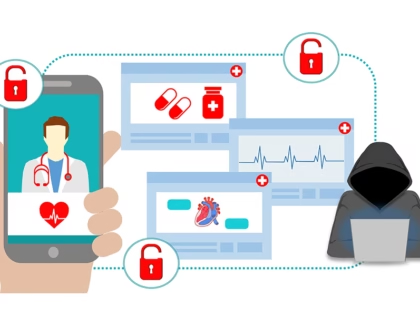
With the widespread adoption of electronic medical records (EMRs), healthcare facilities in Ghana are now responsible for securing vast amounts of sensitive patient information. Unfortunately, many organizations lack structured access control mechanisms, leading to risks such as unauthorized access, insider threats, and cyberattacks.
The RBAC model is gaining traction as a proven access control solution that ensures only authorized personnel can access specific data. This approach minimizes the risk of data breaches while improving operational efficiency.
How RBAC Enhances Data Security
Under RBAC, user access is assigned based on professional roles rather than individual permissions. This means:
- Doctors can access full patient records for diagnosis and treatment.
- Nurses can view treatment plans but cannot modify diagnoses.
- Administrative staff can schedule appointments and process billing but cannot access medical histories.
By following the principle of least privilege, RBAC ensures that employees only access the information necessary for their duties, reducing exposure to data leaks and cyber threats. Additionally, the system enhances auditability, as every access attempt is logged, making it easier to detect suspicious activity.
The Role of a CIO in Sustaining IT Security
While RBAC is a step in the right direction, healthcare institutions need dedicated IT leadership to implement, maintain, and enforce strong cybersecurity policies. This is where the Chief Information Officer (CIO) plays a crucial role.
dWhy Every Healthcare Institution Needs a CIO:
- Cybersecurity Strategy Development – A CIO ensures that access control mechanisms, firewalls, and encryption are in place to protect patient data.
- Regulatory Compliance – Compliance with Ghana’s Data Protection Act, 2012 (Act 843), Cybersecurity Act and international standards like HIPAA requires structured data governance, which a CIO can oversee.
- Risk Management & Incident Response – A CIO develops and leads cybersecurity incident response plans, ensuring quick recovery from potential attacks.
- IT Infrastructure Modernization – Digital transformation in healthcare requires integration of AI, cloud security, and automated threat detection, which a CIO can manage.
- Staff Training & Awareness – Human error remains a leading cause of data breaches. A CIO ensures continuous cybersecurity training for hospital staff.
A Call for Strategic IT Leadership in Healthcare
As Ghana continues to advance its digital healthcare transformation, hospitals and clinics must recognize that data security and IT governance are not just technical concerns but fundamental components of organizational strategy. In an era where healthcare institutions are increasingly dependent on electronic health records (EHRs), cloud-based medical systems, and telehealth solutions, cybersecurity threats, regulatory compliance challenges, and operational risks are on the rise. Without a CIO to oversee IT strategy, risk management, and compliance frameworks, healthcare institutions risk falling behind in cybersecurity best practices, exposing sensitive patient data to breaches, cyberattacks, and unauthorized access.
Beyond the technical risks, the absence of strategic IT leadership can result in regulatory penalties, particularly in light of Ghana’s Data Protection Act, 2012 (Act 843), which mandates that organizations handling personal data implement adequate safeguards to protect individuals’ privacy. Healthcare providers that fail to establish strong IT governance structures may face legal consequences, operational disruptions, and damage to their reputation. Moreover, as digital health systems become increasingly interconnected, ensuring seamless interoperability, data accuracy, and secure information exchange across healthcare networks will require expert oversight and a well-defined governance framework.
The implementation ofRBAC is an important step toward securing healthcare data, ensuring that only authorized personnel can access patient records based on their roles and responsibilities. However, RBAC alone is not a complete solution—it must be complemented by CIO-led governance that ensures continuous monitoring, enforcement of IT policies, and alignment with both local and international security standards. A CIO provides executive oversight, ensuring that security measures like RBAC are regularly updated, integrated with other cybersecurity protocols, and adapted to evolving threats.
In the absence of dedicated IT leadership, hospitals and clinics may struggle to proactively address cyber threats, manage IT investments efficiently, or implement long-term digital strategies that enhance patient care and operational efficiency. A CIO-driven approach ensures that technology adoption is strategic, security frameworks are robust, and compliance requirements are met, ultimately strengthening the overall resilience of Ghana’s healthcare system.
To navigate the complex challenges of digital transformation, healthcare organizations must prioritize structured IT leadership. Institutions that invest in CIO-led governance will be better positioned to implement effective cybersecurity measures, optimize IT resources, and foster a culture of digital innovation. More importantly, strong IT leadership will ensure that patient data remains secure, trust in healthcare services is upheld, and Ghana’s healthcare sector can fully harness the potential of digital health technologies.
Conclusion
The implementation of RBAC in Ghana’s healthcare sector is a significant step toward strengthening patient data security and ensuring compliance with regulatory standards. However, without dedicated IT leadership, such efforts may not be effectively sustained.
A CIO is essential for overseeing cybersecurity strategy, regulatory compliance, and IT infrastructure modernization. As hospitals and clinics continue to adopt digital systems, appointing a CIO will help prevent data breaches, enhance patient trust, and improve operational efficiency.
To fully realize the benefits of digital healthcare transformation in Ghana, institutions must not only invest in advanced security measures like RBAC but also prioritize IT governance at the executive level. By doing so, they can ensure a secure, resilient, and future-ready healthcare system that protects patient data and upholds the highest standards of privacy and security.
Author: Abubakari Saddiq Adams a Business IT & IT Legal Consultant with a focus on IT Governance and Cybersecurity | Member, IIPGH
For comments, please get in touch with +233246173369/+233504634180 or email Abubakrsiddiq10@gmail.com.