Introduction
The integration of cutting-edge technologies such as Artificial Intelligence (AI), Virtual Reality (VR), Augmented Reality (AR), and gamification is reshaping the global education landscape. For Ghana, a country actively pursuing digital transformation, these innovations provide an unprecedented opportunity to enhance teaching, improve learning outcomes, and bridge educational gaps.
However, as we embrace these advances, it is critical to explore their potential benefits, challenges, and implementation strategies to ensure they contribute meaningfully to Ghana’s education system.
AI in Education: Personalization and Efficiency
AI-powered learning tools are at the forefront of revolutionizing education by offering personalized experiences. These systems analyze student data to tailor learning materials and adapt to each learner’s pace and style. For instance, AI can recommend specific exercises for a student struggling with algebra or suggest advanced content for high-performing learners.
In addition to personalization, AI provides data-driven insights that enable educators to identify learning gaps and track progress. This helps teachers refine their strategies, ensuring no student is left behind. Furthermore, AI automates repetitive tasks like grading and lesson planning, giving teachers more time to focus on student engagement and mentorship.
For inclusivity, AI-based tools such as speech-to-text applications and adaptive interfaces are a game-changer for students with disabilities. These tools ensure that all learners, regardless of physical or cognitive challenges, can access quality education.
Virtual and Augmented Reality: Learning Beyond Boundaries
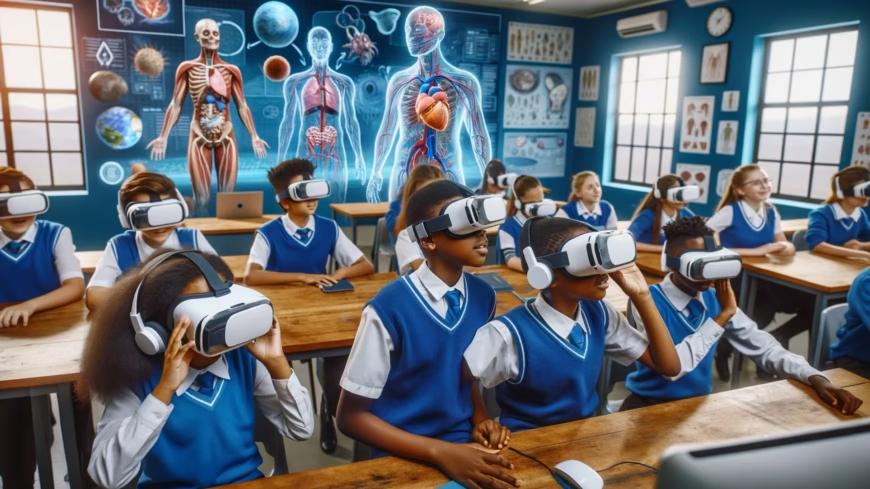
VR and AR are turning traditional classrooms into immersive learning environments. With VR, students can step into a virtual world—whether exploring ancient civilizations, conducting science experiments, or observing astronomical phenomena. Similarly, AR overlays digital information onto the physical world, making complex concepts easier to grasp.
For instance, medical students in Ghana can use VR to simulate surgeries or understand human anatomy in 3D. Engineering students can experiment with prototypes in a virtual lab before building physical models. These tools also enhance remote learning, allowing students in underserved areas to join virtual classrooms and interact in real-time with peers and instructors.
Cost and safety are additional advantages. Dangerous experiments or expensive machinery can be simulated through VR and AR, ensuring students gain practical knowledge in a secure and cost-effective manner.
Gamification: Making Learning Fun and Effective
Gamification, the integration of game design elements into learning, is rapidly gaining popularity for its ability to engage and motivate students. By introducing points, levels, badges, and rewards, gamified learning encourages students to remain active participants in their education.
For example, a gamified math app might challenge students to solve equations to ‘unlock’ new levels or earn rewards. This method leverages the brain’s reward system to reinforce learning, resulting in improved retention and comprehension.
Beyond individual learning, multiplayer educational games foster teamwork, communication, and problem-solving. They encourage students to collaborate on challenges, and build skills that are crucial in the modern workplace.
Addressing Challenges in Technology-Driven Education
While these advancements offer immense promise, they are not without challenges, especially in developing nations like Ghana.
1. Accessibility: Many schools in Ghana lack access to reliable internet and modern devices, creating a digital divide that disadvantages rural and underserved communities.
2. Cost: The implementation of AI, VR, AR, and gamification requires significant financial investment in infrastructure, software, and hardware, which may strain educational budgets.
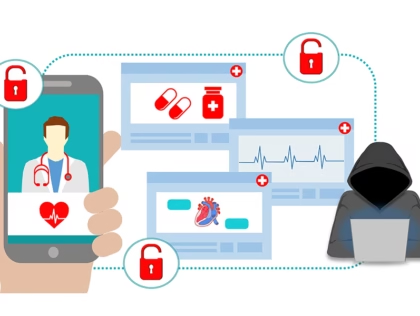
3. Privacy and Security: With increased reliance on AI and digital platforms, there are legitimate concerns about protecting student data, particularly for minors.
4. Teacher Training: Educators need specialized training to effectively use these technologies. Without adequate support, the full potential of these tools may remain untapped.
The Path Forward for Ghana
To maximize the impact of these technologies, Ghana must adopt a strategic approach:
1. Invest in Infrastructure: Programs like the Ghana Investment Fund for Electronic Communications (GIFEC) must be expanded to improve internet connectivity and provide affordable devices to schools across the country.
2. Public-Private Partnerships: Collaboration between government agencies, tech companies, and educational institutions can reduce costs and drive innovation. For example, partnerships with companies like Google or Microsoft can bring advanced tools to classrooms.
3. Teacher Training Programs: Teachers must be empowered with the skills and knowledge to integrate technology into their teaching. Regular workshops and certifications can build their confidence in using AI, VR, and AR tools.
4. Localized Solutions: Technologies should be tailored to Ghana’s unique needs, incorporating local languages, cultural content, and curriculum requirements to ensure relevance and engagement.
5. Promote Inclusivity: Special efforts must be made to ensure students with disabilities and those in underserved regions benefit equally from these advancements.
Conclusion
AI, VR, AR, and gamification hold the potential to transform education in Ghana by making it more interactive, inclusive, and practical. These tools not only enhance learning outcomes but also equip students with critical thinking, collaboration, and digital literacy skills essential for the 21st century.
However, for Ghana to fully realize the benefits of these technologies, the government, private sector, and educators must work together to address barriers like cost, accessibility, and training. By investing in equitable and innovative solutions, Ghana can position itself as a leader in education technology in Africa, ensuring that no student is left behind in the journey toward digital transformation.
As we embark on this exciting path, let us remember that the true goal of technology is to empower not replace the human connections that form the foundation of effective education.
Author: Abubakari Saddiq Adams a Business IT & IT Legal Consultant with a focus on IT Governance and Cybersecurity | Member, IIPGH
For comments, please contact +233246173369/+233504634180 or email Abubakrsiddiq10@gmail.com